Generative AI

Translation

Beyond the Boolean: Is Natural Language search opening or closing the discovery gap for university e-library users?

For decades, the “search box” at the heart of the university library has been a gatekeeper. To unlock the vast treasures of academic databases, users had to speak a specific, rigid language, Boolean. For expert researchers, terms like AND, OR, and NOT are second nature. But for many students without appropriate information searching skills and training, the traditional search interface has often acted more as a barrier than a bridge.

Read More
Translation

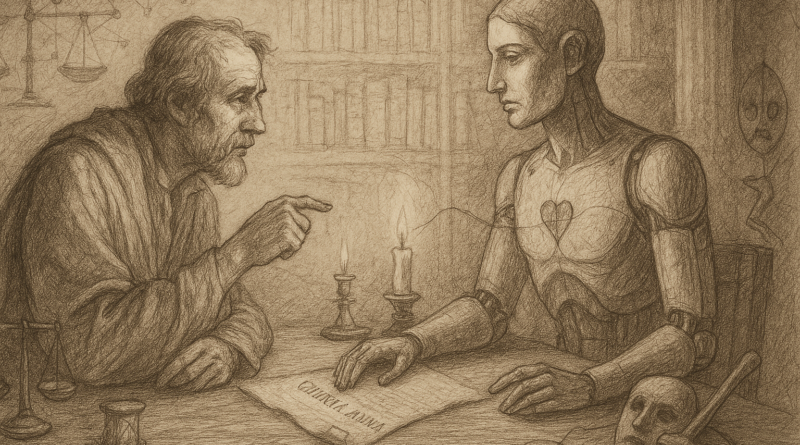
Expert Colleague or Dancing Bear? The Mixed Responses to AI in Digital Humanities Research

A recent study explored how scholars in the digital humanities research domain are navigating this new and complex landscape. Digital humanities is an interdisciplinary research field where scholars employ digital tools and computational methods to investigate cultural and humanities questions. Drawing on an international survey of 76 respondents and 15 in-depth interviews, the study found that scholars are not simply embracing or rejecting these tools. Instead, they are adopting AI systems cautiously, using them to speed up routine tasks, explore ideas, and build new skills, while navigating problems of accuracy, authorship, and what these systems might mean for the future of scholarship. The big question is no longer just whether AI is impressive, but whether it is becoming a genuine research partner, a useful tool, or, for some, still more of a “dancing bear” than a trusted collaborator. By tracing these mixed reactions and everyday practices, the study offers a grounded look at how AI is beginning to reshape academic life.

Read More

INFideos

An Award-Winning Conference Paper and An Educational Video that Situate Generative AI in Library and Information Science

The paper, “Theorising Notions of Searching, (Re)Sources, and Evaluation in the Light of Generative AI” (Sundin, 2025) won the Best Long Paper Award at the 2025 Conceptions of Library and Information Science (CoLIS) conference in Glasgow, Scotland. For me, reading it sparked a eureka! moment. The author, Olof Sundin, argues that generative AI has a precedent in the European Documentation movement of the early 20th century. In addition to historical insights, the paper analyzes how today’s search systems increasingly provide answers or facts, whereas conventional retrieval tools point information seekers to sources.   

Read More
EducationFeatured

The Complexity of Ethic Centered AI Literacy in Higher Education

One of the main challenges which academic librarians face when trying to develop programs and services that support AI literacy is the wide array of stances taken by institutions, and individual faculty members, when it comes to teaching with and about AI tools. These dimensions are not only applicable to students, but also to faculty, who also need help and guidance navigating the new technologies. One aspect which becomes central to this conversation is promoting the ethical use of AI tools in the academic environment. Although the topic has gathered considerable attention in recent conversations, these remain fragmented and divisive.

Read More
FeaturedTranslation

Training Librarians for Crisis Communication: Why Virtual Reality Might Be the Answer

When you step into your local public library on a typical afternoon, you might see children and their families gathered for story time, a retiree reading in a corner, or a student hunched over a laptop. But, just as often, librarians encounter a very different scene: a patron in crisis. Public libraries have increasingly become places where people facing houselessness, mental health crises, or other personal struggles turn for help.

Read More
FeaturedTranslation

Information Integrity, Academic Integrity, and Generative AI

Information science is well-positioned to lead and critically inform the development of theoretical and technological frameworks that support information integrity and academic integrity. If we agree with the argument that generative AI tools and technologies share such high-level facets as people, information, data, technology, and their interaction with information science, then it is our responsibility to embrace the opportunities and address the emerging informational, social, ethical, and cultural challenges.

Read More