
Public Knowledge Is Made: Information Production in a Networked Society
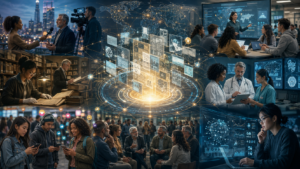
Public knowledge is not simply found; it is produced, filtered, circulated, and contested across institutions, platforms, algorithms, and everyday acts of participation. Bringing together contributions on journalism, education, marketing, archives, health communication, cultural representation, and artificial intelligence, this special issue examines how information gains visibility, credibility, meaning, and public consequence in a networked society.
People You May Know: How Your Favorite Content Creators Become Part of Your Purchasing Decisions
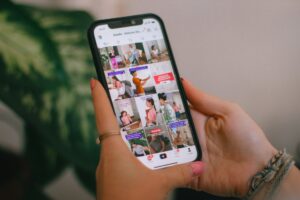
In today’s digital environment, social media has become highly accessible. With smartphones, users can connect to online platforms within seconds anywhere and anytime. As the digital era continues to grow, it has significantly changed how people consume media and entertainment. Traditional channels such as television, radio, and newspapers are now often replaced or supported by social media platforms, where audiences can directly follow influencers, celebrities, and brands. From an Integrated Marketing Communications (IMC) student, this rapid change allows businesses to connect with consumers more directly and strategically.

When a Foreigner Shows Us Home: Filipino Provincial Culture as Public Knowledge on YouTube
This article explores how Jessica Lee’s Probinsya series transforms YouTube travel vlogging into a form of public knowledge production. Viewed through a foreigner’s perspective, familiar places are reintroduced with renewed curiosity and appreciation, encouraging Filipinos to see their own communities in a different light. By documenting provincial life and circulating it through digital media, Probinsya functions as a cultural archive that preserves, shares, and reactivates knowledge about Filipino culture. The series demonstrates how travel content can become a meaningful space for producing, remembering, and making cultural knowledge accessible to the public.

Distorted Memory In the Digital World: The Vulnerability of Online Public Memory in the Philippines
Journalism is, by design, factual yet subjective to its meaning. Individuals favor the truth when it speaks for their personal interests—a quiet authority influencing what the public comes to accept as the truth. Set against the backdrop of political media in the Philippines, the public themselves maneuvers the normalities within the ideology of what is socially accepted and ethically right. Media were the vehicle to arrive at the concept of truth in power within a public discourse. And the newsroom is not by choice, flooded by information offering different perspectives contrastingly, forcing journalists to navigate a constant stream of competing narratives, biases, and interpretations in pursuit of engaging yet accurate reporting. The challenges of journalism were not limited to the premises of the newsroom, instead, it extended beyond and into broader political and institutional structures that influence how information is produced and circulated.
From For You Page to Public Knowledge: How TikTok Shapes Student News
TikTok started as a place for fun videos, but for many students it has become a source of news. On the For You Page, a breaking headline can appear right after a dance trend, showing how algorithms now decide what we see. This makes news quick and easy to access, but it also blurs the line between fact and opinion. For Filipino youth, TikTok is more than entertainment: it’s shaping how our generation learns about the world.
Social Media as Pseudo-Public Spaces: The Digital Arena in the Hearts and Minds of the People
Public knowledge is no longer shaped solely by traditional institutions such as schools, libraries, newspapers, or governments. Increasingly, online platforms, search systems, metadata structures, and algorithmic visibility determine what information people encounter, how they understand issues, and what they ultimately regard as the truth. Social media platforms and search engines, and later on artificial intelligence large language models, have become major gateways to knowledge, influencing not only access to information but also the formation of public opinion. Understanding their role is essential for evaluating contemporary debates about misinformation, algorithmic transparency, and democratic participation.
Speeding Up, Slowing Down: Critical Thoughts in Today’s Networked Society
Speeding Up, Slowing Down: Critical Thoughts in Today’s Networked SocietyAllison AtisWe are writing at a crucial point in time, when

Towards Augmented Participatory Archives: What Role for Citizens’ Collective Intelligence in the Age of AI?
Citizens act as co-creators who should collaborate with archivists to enrich AI-generated archival descriptions, by highlighting the symbolic and emotional aspects conveyed by these records. This role is complemented by that of citizens who serve as auditors, verifying the quality of the outputs generated by disruptive technologies.

Targeting the Filipino Consumer: Data-Driven Marketing, Personalization, and Privacy in Philippine Integrated Marketing Communication
Have you ever searched for a product online and then suddenly seen advertisements for it everywhere? Many Filipinos experience this every day while browsing Facebook, TikTok, YouTube, Instagram, Shopee, Lazada, or even Google. A simple search for shoes, gadgets, skincare products, or food deliveries can quickly turn into a flood of personalized advertisements across multiple platforms. This experience may feel convenient because consumers discover products related to their interests, but it also reveals how modern marketing depends heavily on personal data. In today’s digital environment, companies no longer simply advertise to broad audiences. Instead, they study consumer behavior, collect digital information, and create targeted campaigns designed for specific individuals. This shift has transformed Integrated Marketing Communication (IMC) in the Philippines and raised important questions about privacy, ethics, and consumer awareness.

Receipts, Screenshots, and Viral Accountability: Brand Crisis Communication in Filipino Networked Publics
In the Philippines, that question no longer belongs only to cashiers, customer service counters, or proof of payment. Online, it has evolved into a demand for evidence. A screenshot of a deleted reply. A stitched TikTok exposing inconsistent responses. A Reddit thread comparing experiences. A comment section filled with strangers realizing they encountered the same issue. In Filipino digital spaces, receipts have become social proof. Once something is reposted enough times, it stops becoming a private experience and starts becoming a collective memory.

When Filipino-ness Became a Conversation: Digital Storytelling and Public Knowledge in the Classroom
What began as a classroom viewing activity became a deeper conversation about what it means to be Filipino. Through digital storytelling, students did not simply consume cultural knowledge—they actively questioned, negotiated, and participated in its production.
Selling Advocacy: “Tulong, Benta o Doble Kwenta?” — Purpose-Driven Branding and Social Issue Framing in the Philippines
In the Philippines, advocacy is deeply tied to lived experience—shaped by stories of struggle and resilience, strengthened by bayanihan, and carried by shared hope. Filipinos are naturally drawn to causes that feel close to home, from disaster relief and community support to mental health awareness and social justice, because these are not distant issues but realities that touch everyday life. In an age where social media heavily shapes public perception, many brands have learned how powerful these emotions can be—not only for helping others, but also for increasing visibility, engagement, and consumer loyalty. This is where the question begins: Nakakatulong ba talaga? O benta lang?

Budol as an Information Practice: How Filipino E‑Commerce Content Shapes Consumer Knowledge
In the Philippines, the internet functions as more than a mere digital marketplace; it serves as a sprawling digital commons of advice, reviews, hauls, and viral discoveries where purchasing decisions are quietly negotiated and formed. One of the most vivid expressions of this dynamic is the budol phenomenon—the informal and often playful art of persuading someone to purchase an item they did not originally intend to buy. Far from being a simple marketing gimmick, budol culture has evolved into a distinct information practice. It deeply shapes how Filipino consumers evaluate products, understand risk, and assess value in everyday e-commerce.

Who Wrote This Story? Responsible Use of AI Tools, Authorship, and Accountability in Student Journalism
Have you ever been accused by a professor of using AI (Artificial Intelligence)? The idea of being blamed for using the tool can be a modern form of an offense that lowers a writer’s integrity. I once had a friend back in my senior year of high school, a fellow student and aspiring journalist, who was told by our teacher, with a deadly look of certainty, that her article had been written with QuillBot. This reflects a prominent unease in journalism and academia: how the use of AI challenges credibility, authorship, and accountability. According to a report by the ASEAN (Association of Southeast Asian Nations) Foundation in 2026, 83 percent of students in the Philippines have used generative AI for educational purposes. Moreover, the report also claims that while student usage is high, institutional adoption lags behind the rapid widespread use of AI. Only 73 percent of educators in the Philippines use generative AI for teaching, and an even lower 42 percent utilize it for their own writing. It is also stated that AI engagement is widely based on convenience rather than deeper and more rooted learning.
Facebook is the Internet: How Individuals Depend on Facebook Influencers, Community Groups as Information Sources
There is no love like Filipinos’ love for Facebook. — In the Philippines, it is not Google nor Safari that dominates as the information source, it is Facebook. In 2025, Facebook became one of the top information sources, next to the Internet, 75% of Filipinos rely on it daily for news. Approximately 95.8 million Filipinos use the platform which is an enormous chunk of the entire population. During the pandemic era, netizens formed massive communities inside Facebook. These can be seen in the forms such as but not limited to marketplaces (buy & sell and food vendors), local villages, and fandoms. Filipinos dominate the users of Meta, primarily Facebook and Messenger with a staggering 81.9% relative to its total population. Meeting a Filipino is highly likely on the internet and even more common in Meta platforms.

A Question of Power: Citizen Journalism and Its Implications for Formal Journalism
Before I enrolled in AB Journalism, I remember a striking conversation I had with one of my friends’ parent. He asked me why there was a need for journalists if there were individuals who disseminate a seemingly reflection of news-like content online. At that time, I could not argue back as I held a very loose view of the formal practice of journalism. There was a lingering question lost in the conversation: Can the formal practice of journalism be really replaced by an individual practice of information dissemination?

A Thousand Ways to Notice You: How Algorithms Shape What We Buy and Believe in The Philippines
In today’s digital world of an attention-driven economy, visibility itself has become a form of marketing power. In many ways, attention has become a valuable currency, traded constantly between users, creators, advertisers, and platforms.

When Health Claims Travel Faster Than Evidence: CAM Information in Networked Spaces
Health information no longer moves in a neat, straight line from the researcher’s bench to the clinician’s desk to the patient. Today, it ricochets. It travels through search engine auto-completes, TikTok feeds, private WhatsApp groups, and AI-generated summaries long before a patient ever sits down with a doctor or a medical librarian. For cancer patients and survivors exploring Complementary and Alternative Medicine (CAM), this networked reality creates both real possibility and serious risk. In digital spaces, the challenge isn’t just finding information. It is untangling how certain health claims become highly visible, endlessly repeated, and ultimately trusted.

When AI Output Becomes “Good Enough”: Not Everyone Evaluates AI the Same Way
Even when people use the same AI system, they do not evaluate AI-generated information in the same way. For example, imagine two students using Gemini or other generative AI tools for the same assignment and both receive nearly identical answers. One student quickly accepts the response and moves on. The other pauses, checks the information against outside sources, and revises the AI-generated output before using it.
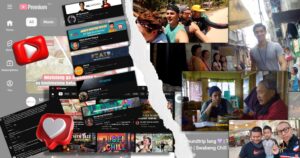
Kapwa and Believability: How YouTube Content Becomes Public Knowledge
This article explores how YouTube content becomes believable enough to shape public knowledge. Drawing from Filipino Personhood Theory, it argues that believability emerges through Kapwa, Pakikiramdam, and Kagandahang-loob—forms of relational trust, communicative sensitivity, and moral credibility that extend beyond algorithms and visibility metrics.