When Filipino-ness Became a Conversation: Digital Storytelling and Public Knowledge in the Classroom
When Filipino-ness Became a Conversation: Digital Storytelling and Public Knowledge in the Classroom
Dionar M. Acosta, M.A.
I first brought The Filipino Story into my Communication, Culture, and Society class as a supplementary material on Filipino identity. I expected my students to watch, reflect, and connect the video to our lesson. What I did not expect was how quickly a classroom viewing activity would become a deeper conversation about what it means to be Filipino.
I had been looking for materials that would allow students to encounter Filipino identity not only as an abstract cultural concept, but as something alive, mediated, and continuously negotiated. In my class, Filipino identity is not merely a unit in the syllabus. It is a necessary starting point for understanding how culture shapes the ways Filipinos communicate, belong, remember, and recognize one another.
When I finally brought the videos into the classroom, I was struck by their attentiveness. Many watched closely, nodding as though quietly affirming the narratives being presented. Some smiled. Others seemed to encounter realizations that had long been present in their lives but had never been fully named. A few became visibly emotional, moved by the recognition that Filipino culture could be presented with such beauty, depth, and dignity.
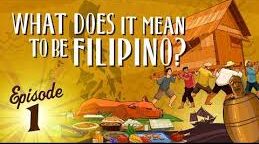
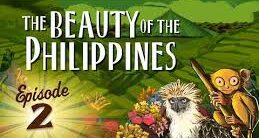
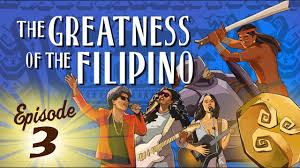
The responses, however, were not purely affirmative. There were also moments of hesitation and contestation. Some students questioned whether the narratives fully captured their own experiences, while others wanted to complicate what the video appeared to celebrate. Yet this was precisely what made the activity meaningful. The video had not simply held their attention. It had opened a space for recognition, questioning, and shared reflection.
That moment made me realize that lessons on Filipino identity and digital storytelling do not have to exist separately. It can become an entry point for deeper cultural reflection, helping students recognize themselves, question inherited assumptions, and participate in the shared work of making identity meaningful.
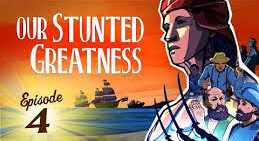


Seeing Ourselves in the Story
What emerged first from the discussion was a sense of recognition. The transition from abstract cultural theory to personal recognition occurred almost instantly once the students began watching the digital narratives. For many, the videos were not merely historical accounts but functioned as a mirror for their own lives. One student observed that the screening felt less like formal instruction and more like a “communal invitation” to explore a familiar inner self. This sense of belonging was most palpable in the depictions of the Filipino family.
This recognition extended beyond the household into the broader community. Students recognized the “genius of the Filipino” not in textbooks, but in the everyday shared experiences of calling strangers ate or kuya as a sign of respect. These moments validated core Filipino values such as kapwa and bayanihan.
By seeing these values animated on screen, the classroom became a space of “intellectual openness and vulnerability”. The collective realization that “we are all in the same boat” or a “country-sized balangay” transformed the lesson into a shared journey. As one student summarized, they stopped seeing their identity as a monolith and began to see it as a living connection that “binds Filipinos together through culture, struggle, and hope”.
Questioning the Story
Yet recognition was not the only response. While digital storytelling offered a compelling entry point, the students did not accept these narratives at face value. Instead, many felt a distinct tension, noting that the videos sometimes “lean towards romanticizing the Philippines so much that it doesn’t feel real or grounded”. One student critiqued the tendency to “overglorify” traditional customs, arguing that such portrayals often “shadow the nuances of a community”. For these learners, Filipino identity is not just about the idealized spirit of bayanihan; it must also account for “crab mentality and toxic family gossip,” which remain “very real and common issues” that can break communities apart.
This active negotiation was especially evident when discussing the diversity of Filipino experiences, particularly regarding migration. While the series framed moving overseas as an “epic tale,” one student pushed back, explaining that for their relatives, the experience was a “point of struggle” and a difficult trade-off for survival rather than a heroic journey. Skepticism also emerged regarding national exceptionalism.
When a video claimed that no one values family quite like Filipinos, a student critically asked, “How are we sure that we are the most family-oriented culture? … Are we really that special?”.
These disagreements underscore that Filipino identity is not a “neat little box,” but a “wide spectrum”. The students recognized that identity is “authentically dispersed” and varies significantly by “social class, province, religion, and generation”. By challenging “sugar-coated” narratives, they moved toward a version of “Filipino-ness” that is “realistic and grounded”. Their reflections demonstrate that cultural identity is never simply received; it is a “continuously evolving” process that is actively “redefined” against the backdrop of lived struggle and contemporary social reality. What emerged from the discussion was not consensus but participation. Students were not merely receiving cultural knowledge about Filipino identity. They were actively evaluating, affirming, contesting, and reshaping it. In doing so, they became participants in the ongoing production of public knowledge.
More Than a Teaching Tool
The more interesting question for me was not whether the students learned from the videos, but why they seemed willing to engage with them so deeply. As I reflected on our discussions, I realized that the videos were accomplishing something my lectures alone could not. Students were not merely learning about Filipino identity; they were encountering it through stories, images, and experiences that felt familiar to them.
Several students remarked that the videos felt different from the materials they were accustomed to in school. One student observed that while textbooks often present facts, dates, and definitions, the videos gave those ideas a sense of life and immediacy. Another suggested that the narratives felt less like a lesson and more like a conversation. The combination of animation, storytelling, and reflective narration appeared to make difficult concepts such as Kapwa, Bayanihan, and cultural belonging more tangible and relatable.
What struck me most was how the videos encouraged students to connect historical and cultural narratives with their own lived experiences. They were not simply absorbing information. They were comparing it against family stories, provincial memories,
 community practices, and personal encounters. In many ways, the discussions resembled the oral exchanges through which culture has long been transmitted, except that this time the conversation was mediated through a digital platform.
This experience reminded me that in a networked society, platforms such as YouTube can do more than entertain. They can become spaces where people encounter ideas, revisit assumptions, and participate in the ongoing construction of meaning. The videos did not replace the classroom discussion; rather, they gave students a common point of reference from which deeper conversations could emerge. What began as a supplementary learning material ultimately became a catalyst for reflection, dialogue, and the collective negotiation of Filipino identity.
Public Knowledge in the Classroom
The classroom experience ultimately revealed something larger than the effectiveness of a teaching strategy. The search for Filipino identity in a networked society is no longer a solo journey through dusty archives; it is a collaborative, public act of creation. As these student reflections reveal, digital storytelling serves as a vital bridge, transforming abstract cultural theories into lived, “flavorful” experiences that resonate with the inner self. However, the most profound learning occurs when students move beyond passive consumption to become active participants—questioning “sugar-coated” narratives and weighing media portrayals against their own diverse, and sometimes tragic, realities.
This transformation of the classroom into a site of negotiation proves that public knowledge is not something merely received from an authority; it is collectively constructed through every shared story and every moment of pakikiramdam. Ultimately, becoming Filipino today means more than just inheriting a history; it means recognizing that we are all part of a “country-sized balangay,” navigating the same vast cultural waters together. In our networked world, identity is a “continuously evolving” story.
We write it together because we recognize our kapwa in the voices on our screens and the classmates by our side. To be Filipino is to realize that while our individual paths vary, we are always, and fundamentally, “on the same boat“.
What began as a classroom viewing activity ultimately became a reminder that knowledge about who we are is no longer produced only by institutions, textbooks, or formal authorities. It is increasingly shaped through digital stories, public conversations, and the collective acts of recognition and negotiation through which people make sense of themselves and one another.