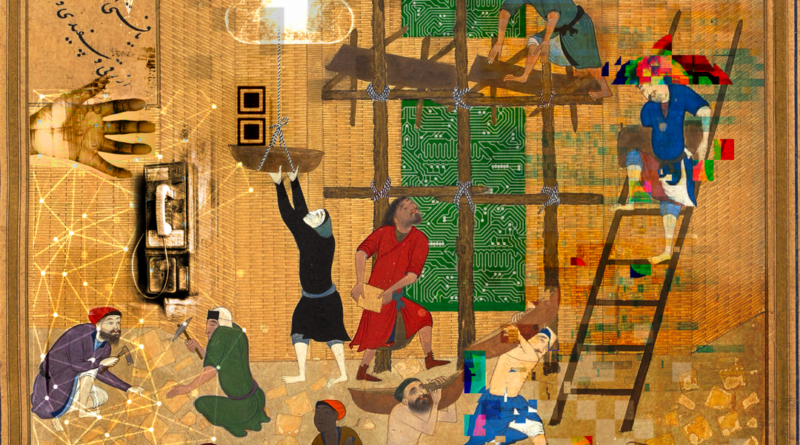
GenAI Benefits and GenAI Burdens: Two Sides of the Same Coin?
Users of GenAI applications need to understand that using GenAI can lead to benefits but also introduces burdens. The benefits and the burdens are two sides of the same coin.
Read MoreUsers of GenAI applications need to understand that using GenAI can lead to benefits but also introduces burdens. The benefits and the burdens are two sides of the same coin.
Read MoreWith Artificial Intelligence’s (AI) seemingly increasing integration into various aspects of society, nations worldwide—including Tribal Nations—are assessing its impact on the changing landscape. AI is a revolutionary technology that poses potential opportunities and risks for federally recognized Indian Tribes (Tribal Nations or Tribes) and their citizens. This article provides an overview of the literature related to AI in a tribal context.
Read MoreIn this paper, we explore successful AI training initiatives, resources and networks for librarians, AI integration strategies, and implications of AI for library services. Join me in discovering best practices for preparing librarians as leaders in the generative AI era and integrating AI into library services.
Read MoreWhether we like it or not, know it or not, we have been living in the agentic age of algorithms long before the recent rush to building agentic systems. None of these systems were explicitly programmed to promote conspiracy theories. But they were programmed to maximize engagement, and they discovered—through the same machine learning techniques that help them recognize faces or translate languages—that false, emotionally charged content was engagement gold.
Read MoreRecently, a group of 3 published an open letter signed by over 400 qualitative researchers. Their message was clear: “Keep AI away from our work.” They argue that using AI to find themes in data kills the “reflexive” process, the deeply human act of interpreting nuance, emotion, and meaning. I have spent my career championing the human touch in the EdTech works and research. I understand their fear. However, I believe this total rejection is a mistake. We should not be banning Gen AI; we should be teaching researchers how to master it.
Read MoreArtificial Intelligence (AI) is reshaping nearly every corner of human life—from classrooms to hospitals and corporate offices. But what happens when it enters the house of worship? Can a machine deliver the word of God, or does this cross a sacred boundary? Our study, “AI in the House of God: Threat, Tool or Transformation?” (ASIS&T 2025), explores how people respond to AI-driven sermons and what this means for the future of faith and technology.
Read MoreBehind every “You May Also Like” video sits an algorithm — an invisible curator quietly shaping what we see and what we don’t. Most of us accept this invisible hand as usual. We know it’s there, even if we don’t fully understand it. But for older adults, those who first learned about the world through newspapers, radio, and television, the logic of these recommendations can be confusing.
Read MoreWe’ve been sold a lie about human-AI collaboration. The truth is far more unsettling: humans and AI don’t operate on different levels—they operate in fundamentally incompatible realities. One experiences genuine uncertainty and constructs meaning through time; the other executes pattern-matching in milliseconds without ever “knowing” anything at all. It’s time to stop pretending they’re teammates and start designing for what they actually are: oil and water.
Read MoreAI chatbots become less safe the longer you talk to them, yet mental health conversations are precisely the extended dialogues where safety fails most catastrophically. As the FTC investigates tech companies, we must confront why children seek help from algorithms instead of the adults who should be there for them.
Read MoreAI is the new plastic because our relationship to it is proving just as short-termist. There isn’t enough evidence to suggest that we are planning, as a planet, for AI’s long-term risks. We’re governed mostly, in fact, by what AI is doing now.
Read More