Featured

FeaturedTranslation

Problems With Archiving and Replaying Web Advertisements

Advertisements are an integral part of our cultural heritage, and this extends to online web advertisements. Unlike print ads, web ads are dynamic and interactive, which makes them difficult to archive and replay (i.e., load archived web resources in a web browser) successfully . To explore these challenges, we created a dataset of 279 archived web ads. During this study, we identified five major problems with archiving and replaying web ads, which we discuss in detail in our article “Problems With Archiving and Replaying Current Web Advertisements”. 

Read More
FeaturedFrontiers

Governance as Code: How AI is Enforcing Information Policies Directly in the Tech Stack

Traditional governance models, reliant on static documents and manual reviews, are fundamentally incompatible with the velocity and complexity of modern AI and software development. This paper examines the paradigm of “Governance as Code” (GaC), a transformative approach that embeds information policies, ethical guidelines, and compliance controls directly into the technology stack. By translating human-readable rules into machine-executable code, GaC enables proactive, automated enforcement within DevOps and AIOps pipelines. We explore practical implementations such as AI guardrails that filter sensitive prompts and automated risk-tiering systems that streamline project oversight.

Read More
FeaturedOriginal

Making Sense of REF, Impact and Creative Outputs Through the Infosphere

In the UK higher education landscape, the Research Excellence Framework (better known as the REF) plays a major role in shaping how research quality is understood. And if it’s in a creative-industries university…say somewhere like Falmouth, REF talk can feel especially odd. Suddenly the performance, film, installation, digital game or community project has to be explained using phrases like reach, significance, pathways to impact and it’s like being asked to translate creative souls into spreadsheet cells.

Read More
EducationFeatured

Lessons in AI Literacy and Explainability from Lucy and Ricky

In the classic 1950s TV sitcom I Love Lucy, when Lucy did something outrageous her husband Ricky would exclaim “Lucy, you’ve got some explainin’ to do!” Typically, Lucy would come up with some sort of implausible response. Hilarity ensued. Well, it’s not the 1950s anymore but 70+ years later Large Language Models (LLMs) and AI chatbots (e.g., ChatGPT, Gemini) are doing outrageous things (hallucinations, fabrications, misinformation, and worse) and the explanations, if there are any, are just as implausible. And it isn’t funny.

Read More
FeaturedTranslation

AI in the House of God: A Threat, Tool or Transformation?

Artificial Intelligence (AI) is reshaping nearly every corner of human life—from classrooms to hospitals and corporate offices. But what happens when it enters the house of worship? Can a machine deliver the word of God, or does this cross a sacred boundary? Our study, “AI in the House of God: Threat, Tool or Transformation?” (ASIS&T 2025), explores how people respond to AI-driven sermons and what this means for the future of faith and technology.

Read More
EducationFeatured

Nourishing Communities with Knowledge: A Culinary Analogy Revisited

When teaching brand new doctoral students in library and information science (LIS), much discussion is dedicated to theories, paradigms, and the distinctions, and divides, between library science and information science. After reading Marcia Bates’ iconic article, The invisible substrate of information science (1999), a student asked: How do I explain what I do to others? How do I describe the relationship between data, information, and knowledge? 

Read More
FeaturedOriginal

Paperless Society: The Prediction That Came Too Early, Yet Came True

In the early 1970s, bold predictions emerged about the coming of a “paperless society.” The concept was first formally introduced by F. W. (Frederick Wilfrid) Lancaster, an information scientist and professor at the University of Illinois, who envisioned that advances in information technology would make paper largely obsolete by the year 2000. In 2025, Lancaster’s once-ambitious vision appears closer to fulfilment. The long-envisioned dream of a paperless society is gradually becoming a tangible reality, as many sectors including education, commerce, governance and healthcare now rely significantly less on paper for their daily operations.

Read More
FeaturedTranslation

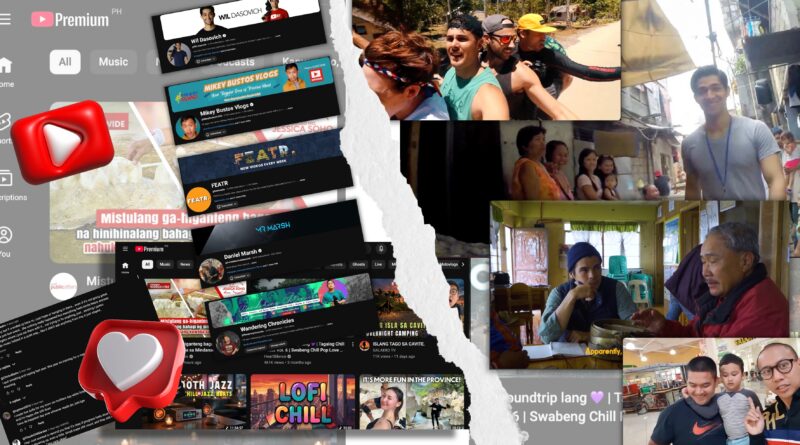
When YouTube Meets Grandma: How Older Adults Perceive and Influence AI Recommendations

Behind every “You May Also Like” video sits an algorithm — an invisible curator quietly shaping what we see and what we don’t. Most of us accept this invisible hand as usual. We know it’s there, even if we don’t fully understand it. But for older adults, those who first learned about the world through newspapers, radio, and television, the logic of these recommendations can be confusing.

Read More