
Framing Information Privilege: Multidimensionality, Inequality, and Reform
This Special Issue of Information Matters on Information Privilege and the Cultures of Scholarly Communication centers notions and experiences on information privilege. Perspectives come from a variety of contributors including scholars, information professionals, and academics, where they articulate what information privilege is in a number of ways.

Put It in a Book: What My Grandmother Taught Me About Information Privilege
One of the most important lessons I have ever learned about information access did not come from a classroom. It came from my grandmother, Priscilla Perkins.

From Taylor Swift to Miss Pooja: Rethinking Information Privilege in the Classroom
Taylor Swift is often described as one of the smartest business strategists in entertainment. From a sold-out and record-breaking global tour, she has become a case study in brand control, platform power, and audience loyalty. So, I used her as an example in my class at a private Canadian university. And almost no one knew who she was.

Information Privilege and the Politics of Translating “Depression”
Information privilege helps us see how access and visibility shape what becomes credible, legitimate, and shareable knowledge. It refers not only to unequal access to information, often structured by institutional affiliation, education, class, or social position, but also to unequal access to the means of making experience intelligible. In scholarly communication, this usually appears through paywalls, subscriptions, databases, and prestige economies. Yet information privilege also operates through language. As discussions from the Association of College & Research Libraries have suggested, access to information is inseparable from access to the systems that authorize what counts as legitimate knowledge.

Breaking Down Language Barriers to Reduce Information Privilege in Scholarly Communication
For decades, English has been a lingua franca in the research community, where it has become the principal language for publishing and conferences. But when one main language is used to share information, knowledge of this language is also needed to access information. In this way, English has become linked to information privilege: people who have mastered English can access scholarly information more easily than people who are less comfortable in this language. This has ripple effects, influencing the extent to which scientists can participate fully in scholarly communication. While the problems are clear, the solutions are trickier.

From Access to Epistemology: Rethinking Information Privilege
The systems, tools, and practices developed by Big Tech and academic publishers that we use daily in our personal and professional lives have created inequitable and unjust information environments and societies. This is due to the concentrated power, extreme wealth, and influence in the hands of the few.

Transgender Information Sharing: Reject Tradition, Trust Each Other
“Transgender” is no longer a foreign word in the Philippines, nor are transgender Filipinos allowing discrimination to hold them back. Though LGBTQIA+ minority groups in the Philippines are still seen as “deviant, immoral, or even illegal” by the wider population, transgender Filipinos do not let that stop them from thriving. Instead of relying on traditional sources of information and risking intolerance from Filipino society, they create, recreate, and distribute information they’ve made themselves for both education and community solidarity.
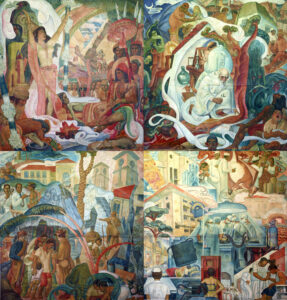
The Vantage Point: Reflections on Information Privilege as a Physician-Librarian
As a librarian (occasionally practicing) and a practicing physician, I often encounter workplace issues that would be better resolved with a little perspective from the information field. Problems, such as the need to search for reliable information in order to treat a particularly challenging medical case, are commonplace. This can be a frustrating but fascinating experience, as I, being an information professional, have some intrinsic knowledge of the issues that make solving these problems a challenge.
Who Is Research For? Rethinking Information Privilege
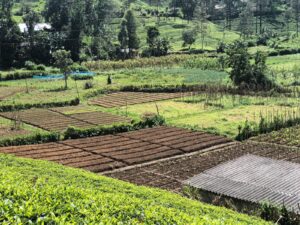
Have you ever shared your personal story with someone—only to never hear what happened to it afterward? This happens more often than we realize in academic research. Communities open their homes, share their experiences, and give researchers hours of interviews and photographs. Later, the research appears in journals, conferences, and university libraries. But the people whose lives shaped that research may never see the final results. Why? Because academic knowledge often circulates within privileged spaces—behind paywalls, in English, and through technical language.

Localizing OER to Counter Information Privilege
The rising cost of textbooks can lead university students to make tough decisions, such as buying a cheaper, outdated version, sharing a single copy among a group, making an illegal copy, or going without a textbook altogether. Each of these coping strategies can negatively impact a student’s learning. Thankfully, open educational resources (OER) are emerging as a means of combatting information privilege that is linked to finances. This is a positive step forward, but is it enough? How else can we leverage the potential of OER to reduce other types of information privilege?

Information Privilege and the Urban South: Lessons from Doing Tondo Studies
Information privilege is usually framed as unequal access to journals and databases. But place-based research in Tondo shows it also shapes which cities become legible in scholarship, how Urban South communities must be narrated to be publishable, and who benefits from the knowledge produced. Drawing from fieldwork in Isla Puting Bato, this essay traces how information, visibility, and authority are distributed, and offers practical ways scholars can help research travel back across paywalls, institutions, and languages.
From Uneven Access to Shared Support: Responding to Information Privilege
This is what information privilege looks like in practice: the ability of some people to access information that others cannot, shaped by affiliation and economic context. It also shapes visibility in which work becomes easy to find, cite, and treat as “authoritative.” The ACRL Framework’s “Information Has Value” frame invites us to examine how information is embedded in economic and social systems, and how unequal access influences what counts as legitimate and trustworthy knowledge.

The Impact of Digital Redlining in a Post-Pandemic World
As public spaces, employers, and schools shut down in response to the coronavirus pandemic in March 2020, an issue that librarians and educators were familiar with became evident: the digital divide was alive and well in communities around the world. While historically, the digital divide has been defined since the middle of the 1990s as “the gap between those who do and those who do not have access to new forms of information technology” , two decades later, this definition encompasses information technology such as broadband internet, home computers, stable mobile telephone connectivity and digital television.

The Data Divide: How Premium Financial Databases Stratify Business Education
Two students complete the same business degree, take similar courses, and earn comparable grades. One graduates with a Bloomberg certification and fluency in an industry-standard financial database. The other has never logged into a professional data platform. One has the opportunity to compete in a case competition using financial market information to build professional information literacy, while the other is excluded based on lack of database access. The difference comes down to the funding capacity and priorities of the institution they attended.

From Gatekeepers to Guides: Unlocking Information Privilege in the Library Classroom
In my practice, I use Critical Information Literacy as a teaching method to help students understand the power structures that exist behind their sources, in an effort to deconstruct barriers of information. There is considerable value in teaching the complexities of information privilege, especially to undergraduates who are the next generation of researchers and information consumers.

SOS: Dismantle Information Privilege to Save our Science
The start of this year’s Open Access Week coincided with No Kings demonstrations that took place around the nation on Oct. 18. I found myself that day, as so many of us did, shoulder to shoulder with friends, family and strangers speaking up for democracy. I was at the Seattle Center, at the foot of the Space Needle in downtown Seattle, in a vast crowd, my attention divided between fired-up speakers, inflatable unicorns, posters with wry comments and a rank of flags for veterans for peace. Amid the crowd was a group of intellectual-looking types, most wearing glasses and lab coats, waving SOS banners: Save Our Science. When I saw the SOS signs, I thought about how difficult it is to protect something we can’t see, how difficult it is to convince people of the value of something that they can’t use.

Towards Knowledge Justice: Centering Marginalized Community Expertise in Academia
Many Canadian post-secondary institutions currently describe themselves as supporting community-based research, where the work of marginalized community members is valued and integrated into community-based research projects. Our experiences working on sister projects the Sex Work Activist Histories Project (SWAHP) and Eco-systems of Community Research and Recordkeeping (ECRR) have led us to conclude that these institutions in fact often undermine or ignore non-academic knowledges and expertise. University reform is needed to support community-driven research, especially for extremely marginalized communities such as sex workers.

The Double Silence: When Scholarly Publishing Can’t Hear Immigrant Survivors
In my previous career as a systems librarian, I saw information privilege as a technical problem: who has the password to the database, and who has the funding for the subscription? But as I transitioned into research with Chinese immigrant cancer survivors, I realized that privilege runs deeper than a personal login. Even if we made every medical journal in the world “Open Access” tomorrow, many of the survivors I work with would still be excluded from the conversation. Removing a paywall doesn’t help if the person behind it can’t read the language or can’t find their cultural realities reflected in what counts as evidence.

Open Access Boom: Citations Up, Barriers Up
Open Access (OA) publishing has become a major change in how research is shared. In traditional publishing, readers pay to access articles through journal subscriptions. In OA, articles are free to read online right away. This trend has grown fast because many believe it makes science better and fairer. Supporters say OA articles get more citations because more people can read them, leading to greater impact. However, authors often pay high Article Processing Charges (APCs) to publish in OA journals. This creates a debate: Does OA truly boost research impact, or does it create new problems by charging authors large fees?

Unlocking access to information through plain language
Have you ever been excited to learn something new, but when you started reading about it, you felt completely lost and ended up setting it aside? A large volume of knowledge production is carried out by researchers, who typically convey it using the specialized language of their subject field. This often includes specialized terminology and expressions, acronyms or other abbreviated forms, stylistic conventions, and even particular ways of structuring or formatting a text. The end result is comprehensible to other researchers in the same subject field, but it may be far less accessible to other groups.

Libraries Don’t Just Close the Digital Divide — They Redefine Digital Equity
While technology is often framed as a great equalizer, access to it remains deeply uneven. The gap is not just about who has Wi-Fi or a laptop. It is about who can fully participate in modern civic, economic, and social life. That is where libraries quietly, but powerfully, step in.

University Libraries: Your Gateway to Citizen Science Success
Are you tired up of travelling across the country to various sites for data collection? Imagine having thousands of eager, geographically distributed volunteers ready to contribute to your research project, and what if these volunteers are people who are already engaged learners, information seekers, and capable of following standard data collection protocols. This resource exists right now in every university library across Sri Lanka.

Can AI Prompting and Academic Libraries Push the Door of Open Access Wider?
The article argues that skilled AI prompting and academic libraries can work together to widen access to scholarly knowledge. As open access grows, AI can explain and synthesize openly available research for broader audiences. But paywalls still limit what AI can analyze, creating visibility gaps between open and closed scholarship. Libraries help address this by improving institutional repositories, supporting OA publishing through transformative agreements, teaching AI literacy, and developing ethical guidelines. Combined, these efforts make research more accessible, understandable, and useful worldwide.