Social Media as States
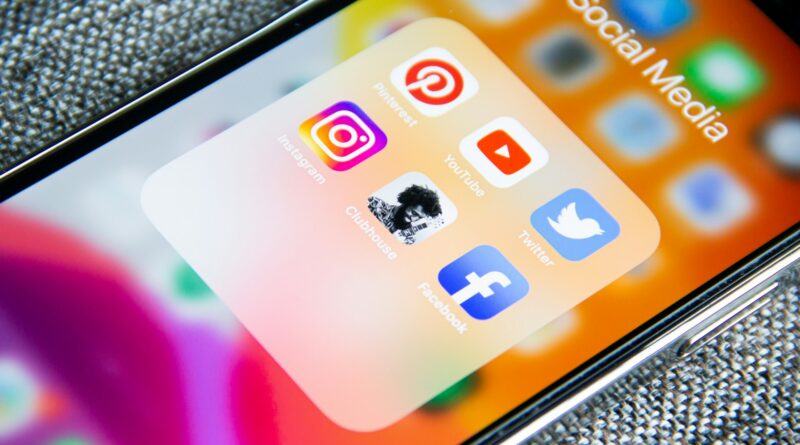
One way is to see how social media have begun to function in state-like ways. As independent, transnational ‘social states’, platforms are enacting their own rules of conduct, deriving their own ‘laws’ – often in advance of nation-state laws – and making their own interpretations and enactments of human rights. Framing social media platforms as ‘states’ encourages attending to the state-like functions enacted in social media. We can see how these social states provide security, manage civil behavior, and navigate human rights issues. We can examine the integral role of social media citizens in forming social media societies, and the aims and responsibilities of these societies and their constituents.
We can approach social media platform such Facebook, Instagram, Twitter/X, Truth Social, Reddit, Bluesky, Mastodon (and more) as entities that are both independent of and engaged with other states, and address issues about their role and place in relation to nation states. Policies of these social states, and the practices of their citizens, play an overwhelming role in influencing how opinion, information, and news are delivered by whom, to whom, and under what circumstances. Hot debate happens around notions of ‘free speech’, where any constraint on expression can be seen as an assault on the freedom and independence of the social state. Platforms have succeeded in modelling free speech practices to such an extent that many refer to them as ‘de facto’ regulators of speech and behavior for offline as well as online domains – whether their rules are proscriptive or permissive.
Social Media as Fragile States
If social media platforms are like states, how well are they functioning? How stable or fragile are their infrastructures? A fragile nation-state fails to support the basics of statehood, with poor or ineffective governance, the inability to provide services for citizens of the state, and the inability to provide security and protection for citizens. It fails to support the rule of law, i.e., the fair, equal and consistent application of well-defined laws.
A fragile social media state similarly fails where it cannot support its user/citizens, provide security and protection for their user/citizens – particularly children and youth – from threats to their safety and data, provide services, and apply fair and equitable practices. While attention tends to focus on the major platforms, failed platforms reveal critical breaking points for social media states, including operations failures, insufficient critical mass, competition from better platforms, and failure to address user community needs.
To articulate the social media fragility points more clearly, we can follow an framework defined for nation states as a way of assessing the fragility of social media. The Fund for Peace (FFP) Fragile States Index evaluates state functioning with 12 Fragile States Indicators covering state cohesion, economic, political and social factors.
Given this framework, what would a Social Media Fragility Index look like? What Social Media (SM) Fragility Indicators would be relevant for such an index?
Answering this question first requires looking at a wide range of literature and cases about the kinds of controversies plaguing social media. Major controversies have centered on content moderation policies and algorithms; data integrity, including misinformation, amplification, propaganda, and misuse of user data; leadership impact; child safety; domestic and non-domestic government regulation and intervention including fake networks and inauthentic use; and issues about human rights.
Analysis of such cases and controversies yielded a framework of six SM Fragility Indicators, presented in brief here. For full details on the indicators and associated controversies see Social Media as Fragile State: Vulnerabilities, Pressures, and Human Rights. (An earlier take on the indicators can be found here.)
As for the FFP, the intent of indicators is to elicit consideration of each area of fragility. The indicators are not intended as a means to classify every case or example under one or another indicator.
In brief, the six SM Fragility Indicators are:
- Vulnerabilities and Protections Indicator addressing technical threats to system operations and protections implemented to address these threats, and design issues about algorithms for content moderation, recommender systems, and child protection
- Social Pressures Indicator addressing issues deriving from the population using the platform: anti-social behavior, social action, user migration, user demographics, toxicity; user concerns about child safety, community versus commerce, and uncertainty in platform direction
- Fragmentation Indicator addressing both the process (e.g., political polarization) and outcomes, e.g., divisions evident by demographics, attitudes to free speech, political affiliation
- Human Rights Indicator for consideration of rights such as the right to be informed, to be forgotten, to data portability; censorship; intellectual property rights; worker rights
- Economic Indicator for factors affecting platform economic viability: revenue sources, workforce adequacy, lawsuits; disaster resilience for system failure or a ‘flood’ of inappropriate content
- External Pressures Indicator addressing pressures from sources outside the control of the platform such as regional government laws and regulations, lawsuits, third-party oversight, and propaganda networks
Complementary to the six indicators are cross-cutting factors that appear in several indicators and suggest ways to consider specific interests about social media, e.g., design, ethos, information access and control, leadership, misinformation, transparency.
Multiple factors are buffeting social media. The SM Fragility Indicators offer a framework to support analysis of forces and pressures affecting current social media. This can be used to compare across platforms, consider new pressures, and/or keep up with changing conditions. The framework can be applied to existing platforms to consider strengths and weaknesses under each indicator and suggest areas that can be addressed by platform technical, social, or policy developments. Applied to social media as a whole, the framework suggests areas where knowledge can be pooled across platforms. The framework can also be applied to assess the potential impact of new apps, e.g., the impact on young users of apps that send repeated alerts to encourage posting (BeReal), content moderation for voices in apps that prioritize audio (Airchat), management of user privacy for apps that use location data (YikYak), and rights in the age of AI (Artificial Intelligence).