
The Chatbot Will See You Now: When Access Isn’t Enough
As a doctoral student in information studies, a native speaker, and a frequent user of digital services, I manage digital healthcare reasonably well. But even I sometimes struggle to know which information matters, how to describe symptoms in writing, or how to interpret the messages I receive. And if I find it challenging, what about people with limited literacy, limited digital experience, visual impairments, language barriers, or cognitive difficulties?
These questions point toward an issue that deserves greater attention within information literacy research.
We often think about information literacy as something that helps people engage with information more effectively. In healthcare, however, information literacy is increasingly becoming a prerequisite for participation itself. Patients are not simply searching for information about health; they are being asked to navigate systems, interpret records, communicate through digital platforms, and make decisions based on information that was often produced for professional purposes.
 This is particularly visible in online access to medical records, the focus of my own research. When I interviewed clinicians working in pediatric psychiatry, support for patients’ right to access their own medical records was almost universal. Transparency was viewed as both ethically important and fundamentally fair.
At the same time, clinicians described the practical difficulties of writing records that must function both as professional working documents and as texts that patients can read and make sense of. Healthcare professionals navigate this dilemma every day. Medical records are not neutral descriptions of reality. They are professional documents written within clinical, legal, and organizational frameworks, containing diagnostic categories, institutional terminology, and forms of reasoning that often require years of training to fully understand. Even healthcare professionals do not necessarily understand documentation outside their own specialty.
Importantly, online access to medical records is only one example of a broader transformation. Across many healthcare systems, patients are increasingly expected to engage with portals, complete digital assessments, communicate through written messages, and interpret medical information on their own. In some cases, these changes increase flexibility and autonomy. In others, patients are being asked to take on new interpretive responsibilities while opportunities for face-to-face support decline.
This is where information literacy becomes a matter of justice.
We often assume that equal access creates fairness. If everyone can log in to the same portal, read the same record, or receive the same information, then everyone has been treated equally.
But equal access does not necessarily create equal opportunity to benefit.
Consider two patients. One has strong literacy skills, reliable internet access, confidence using digital technologies, and family members who can help interpret information when needed. The other is older, less familiar with digital systems, struggles with written language, or is dealing with illness, stress, disability, or cognitive challenges.
Both patients may technically have access to the same information. Yet their ability to benefit from that information is profoundly different.
This distinction matters because healthcare is not simply another information environment. Patients are often expected to navigate information and digital healthcare systems while coping with uncertainty, fear, pain, or emotional distress. They may be encountering unfamiliar terminology during some of the most vulnerable moments of their lives.
In these situations, information literacy cannot be understood solely as an individual skill or personal responsibility. It is also shaped by social conditions, educational opportunities, language, technology, and the design of information systems themselves.
The challenge becomes even more significant as healthcare systems continue to digitize. Digital reforms are often presented as inherently empowering because they provide greater access to information. But access alone does not eliminate inequality. In some cases, it can shift responsibility onto patients while leaving existing differences in literacy, language, education, and digital experience untouched.
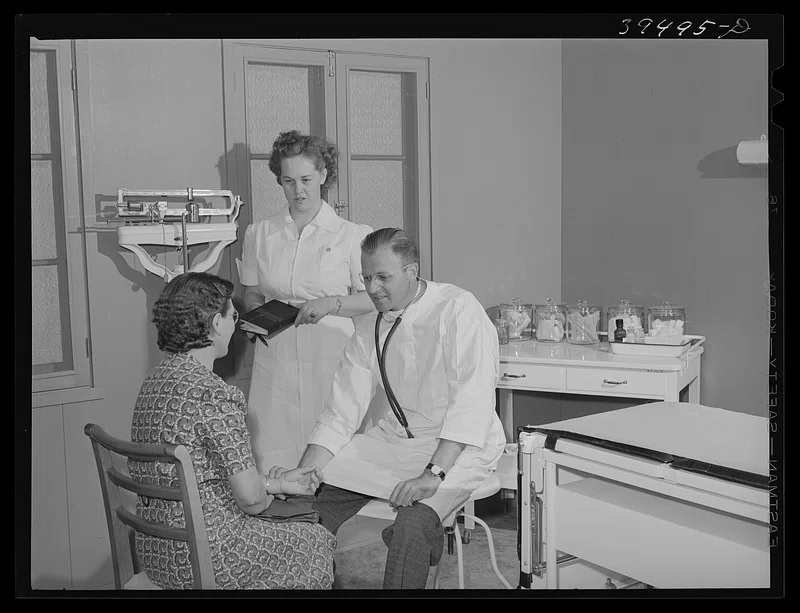
Historically, medical information was often mediated through doctor-patient conversations. Patients discussed test results with physicians, asked follow-up questions, and received explanations tailored to their circumstances. The doctor was not only a provider of treatment but also an interpreter of information and uncertainty.
Today, many healthcare interactions take place through portals, forms, messages, chatbots, and digital records. Information is more available than ever before, but opportunities for interpretation may be shrinking.
This creates a paradox. Patients are given more information while simultaneously being expected to do more of the work required to understand it. Information, once accompanied by professional guidance, increasingly arrives with the expectation that patients will make sense of it themselves.
This does not mean that digital healthcare is inherently harmful or that transparency should be abandoned. Many patients benefit greatly from digital services and greater access to their health information. The problem is not access itself. The problem is assuming that access alone is enough.
As healthcare becomes increasingly digital, understanding how people make sense of health information becomes a central information literacy challenge. It also raises important questions about who benefits from digital healthcare and what kinds of support are needed to ensure that the future of healthcare remains equitable.
Perhaps the question is not whether digital healthcare should exist. It is how much interpretation we are willing to outsource to patients before access begins to resemble abandonment.
I still wonder what happened to my doctor.
Not because I need him to fill out a form or send a message through an app.
But because good healthcare has never been only about access to information. It has also been about not having to face uncertainty alone.