
Preparing the U.S. Workforce to Work Beside AI: The Skills That Will Matter Most
These skills are known as transversal skills, sometimes labelled 21st-century skills or graduate attributes. They are the abilities that travel with you across any job, discipline, or context. Critical thinking. Communication. Problem solving. Ethical reasoning. Collaboration. Adaptability. Digital and AI literacy. They are not tied to one technical specialty, which is precisely why they matter so much when the specialties themselves keep shifting under our feet. Whether someone works in healthcare, engineering, education, law, or the creative industries, these are the human capabilities that hold steady even when the tools around us keep changing. They are also, increasingly, the capabilities that will determine whether the US workforce remains globally competitive in an AI-driven economy.
In a recent working paper, I set out to understand how researchers worldwide have been thinking about these skills in the age of AI, by mapping the published research over the past several years. What surprised me most was the sheer pace of change. The number of studies on this topic has been roughly doubling every year since 2022, when ChatGPT made AI available to anyone with a browser. The conversation moved very quickly from whether AI belongs in education to how universities can prepare graduates to think alongside it. Five major themes emerged most clearly in the research: how to redesign curricula, how to teach differently, how to build AI and digital literacy, how to prepare educators themselves, and how to ready students for an AI-augmented workplace. The United States leads the world in volume of research on these questions, reflecting both the strength of US higher education and the urgency of the national workforce challenge.
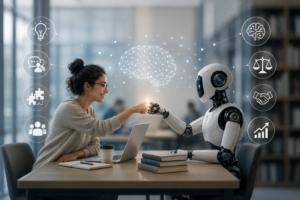
Three specific skills keep appearing again and again, and US labor-market data backs them up. The first is AI literacy: understanding what AI can do, what it cannot, and how to evaluate the answers it produces. LinkedIn’s 2025 workforce data identifies AI literacy as the single most in-demand skill for US workers. Demand for AI fluency in US jobs has grown sevenfold in just two years, from one million to seven million positions. The second is digital competence, broader in scope and covering the everyday tools and platforms that shape modern work. The third, perhaps the most urgent of all, is critical thinking. When a machine can produce a confident-sounding answer in seconds, the human ability to question that answer becomes priceless. Alongside these three, the research points to ethical reasoning, metacognition (knowing what you know and how you think), and self-regulation, and the still-emerging skill of human–AI collaboration — working productively with AI rather than against it or in fear of it. What strikes me about the list is how deeply human it is. The rise of AI is not making these capabilities less important. It is making them more important.
There is also a gap in how higher education connects to the American labor market. Workforce readiness, employability, and the actual voices of employers are underexplored in the research compared with the volume of studies on curriculum design. And the gap is widening in the US economy. 88% of US organizations now use AI in at least one business function, but only 1% have achieved AI maturity. Employers report that the skills gap is their biggest barrier to AI adoption, ahead of cost and technology. These are not abstract numbers; they are pointing to a national workforce development challenge that cuts across every sector, from healthcare to manufacturing to financial services.
So what should higher education take from this? A few things stand out. AI literacy, ethical awareness, critical thinking, and adaptability are becoming central to how students are prepared for the future of work. These skills are increasingly important foundations for an AI-driven workforce. Faculty development is also critical, because educators need support in understanding what these changes mean for their disciplines, their students, and the professions they serve. And finally, students themselves are part of this story. Cultivating AI literacy, ethical awareness, and self-regulation is not something educators can simply do for students; it must be developed with them through active engagement, reflection, and shared responsibility. In the end, preparing the U.S. workforce to work beside AI means preparing graduates not only to use new tools, but to think critically, act ethically, and adapt wisely in a changing world.