Information Privilege and the Urban South: Lessons from Doing Tondo Studies
Information Privilege and the Urban South: Lessons from Doing Tondo Studies
Janice Roman-Tamesis
Tondo is one of the most written-about places in Metro Manila, Philippines. It appears frequently in research on urban poverty, informality, disaster risk, labor, and resilience. Yet in the years I have spent doing fieldwork in this place, I have been struck by a persistent contradiction: research about the community circulates far more widely than the community itself ever can. Articles are published behind paywalls, indexed in databases, and discussed in conferences far removed from the known settlements like Isla Puting Bato. Meanwhile, residents, whose lives and knowledge make the research possible, rarely encounter the outputs in a usable form. This gap is not accidental. It reflects information privilege: the uneven ability to access, circulate, and gain recognition within systems that define legitimate knowledge.
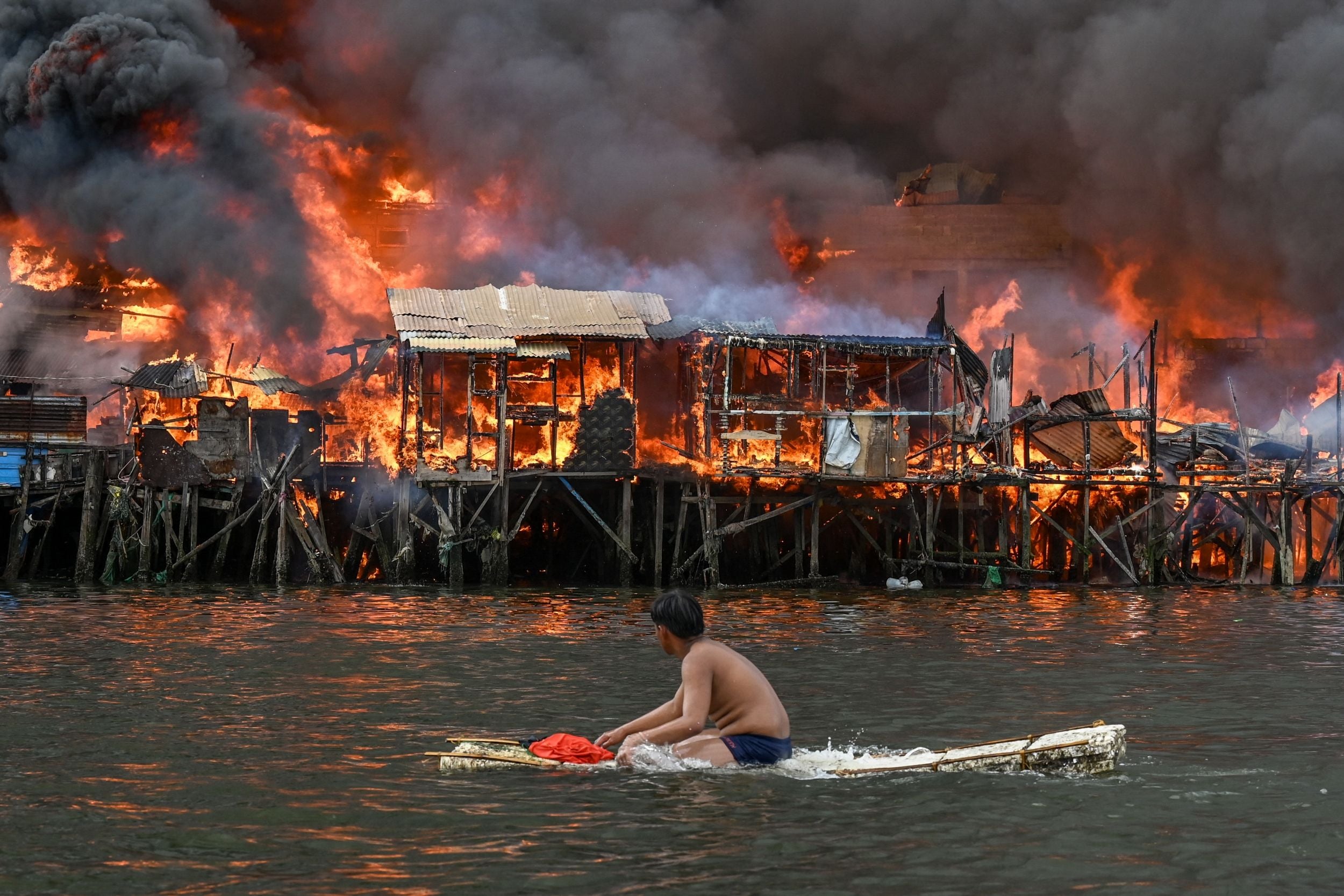
Doing Tondo Studies has made clear that information privilege is not limited to who can download journal articles. It shapes the entire research environment. Access to subscription databases, mapping tools, and even time to write is unevenly distributed across institutions and geographies. For scholars working in the Urban South, these constraints quietly shape the kinds of questions that can be asked, how long research takes, and which outputs are feasible. Research becomes an exercise not only in inquiry but in constant negotiation with infrastructures designed for more privileged academic settings. In this sense, “what the literature says” often reflects who had the resources to publish, where, and in forms discoverable by dominant indexing systems.
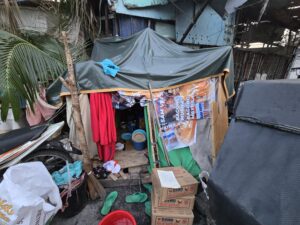
Information privilege also operates through visibility. Some urban places are easier to publish than others. Cities associated with finance, innovation, or global mobility circulate easily in international journals. By contrast, research on places like Tondo often becomes legible to publishing systems only when framed through familiar narratives of crisis and deficit. While these framings are not necessarily inaccurate, they can narrow what kinds of urban knowledge are recognized as credible. Everyday expertise, spatial intelligence, and community-based resilience are harder to publish when they do not align with dominant expectations of what a “marginal” city should look like in scholarly discourse.
This tension becomes sharper when we consider who is supposed to benefit from urban research. In Isla Puting Bato, information is not abstract. It is closely tied to survival. Residents rely on layered communication systems (mobile phones, social media, broadcast television and radio, barangay announcements, and neighbor-to-neighbor alerts) to prepare for and respond to disasters. These channels do not replace one another; they are combined and cross-checked. Residents verify information through multiple sources before deciding whether to evacuate, what to bring, or where to go when a disaster hits. In contexts where misinformation can cost lives, verification becomes an everyday practice of trust-making and risk management (see this review on misinformation in disasters).
Yet the scholarly outputs derived from these realities rarely circulate back into the community in accessible forms. The paper becomes a publication. The data becomes impact. The community becomes a citation. The one-way flow reveals a structural problem in scholarly communication: knowledge travels outward and upward but rarely returns. When that happens, research risks reproducing the very inequalities it often seeks to critique. It also raises a difficult question: if knowledge about a place is systematically inaccessible to the people who live there, what does “public value” in scholarship actually mean?
Teaching and mentoring urban research make this dynamic even more visible. Students interested in studying places like Tondo often work within tight access constraints. Their reading lists are shaped by what their institutions can afford, what is open online, and what platforms prioritize in search results. Without careful guidance, students may internalize the idea that credibility is synonymous with paywalled scholarship, while local knowledge and community expertise are treated as secondary. Pedagogical frameworks that emphasize that “authority is contextual and socially constructed,” as articulated in the ACRL Framework for Information Literacy, offer one way to challenge this hierarchy by teaching students to evaluate sources critically rather than hierarchically.
My own research practice has shifted in response to these realizations. Doing Tondo studies has taught me that dissemination cannot be an afterthought. When communities remain partially invisible in official governance and data infrastructures, returning knowledge becomes an ethical obligation rather than a courtesy. This can take many forms: plain-language summaries, visual outputs, translated materials, community-facing presentations, or publishing in venues that prioritize accessibility. It also means designing research with “return” in mind, so that community-authored knowledge does not end its journey as a PDF accessible only to academics.
Participatory mapping has become central to this approach. In settlements that are underrepresented in formal cartographic and census systems, mapping functions as recognition as much as representation. Translating community-authored spatial knowledge into digital formats, while retaining local categories and meanings, allows that knowledge to travel into planning and disaster governance spaces where it is often absent. If policy decisions depend on what is made legible in data systems, then inclusive mapping practices are not a technical add-on; they are part of addressing inequality in whose realities count.
This has also changed how I think about openness. Open access alone does not dismantle information privilege. Openness without capacity (i.e., connectivity, literacy, institutional support, and appropriate formats) can still leave communities excluded. International initiatives such as UNESCO’s Recommendation on Open Science recognize that equity requires not only open platforms but inclusive participation in knowledge production and circulation.
Ultimately, doing Tondo Studies has convinced me that the Urban South is not merely a site from which data are extracted. It is also a lens for understanding how scholarly communication works and who it serves. Information privilege shapes which cities are studied, how they are framed, who gets to speak about them, and who gets to read the results. If scholarly communication is serious about equity, then access cannot mean access for academics alone. It must also mean access for communities whose lived knowledge makes urban research possible. The challenge is not simply to write more about places like Tondo but to build knowledge practices that allow research to travel back across paywalls, institutions, languages, and the quiet boundaries that information privilege continues to maintain.
Featured image source: Tzu Chi Philippines